


























Views
Downloads
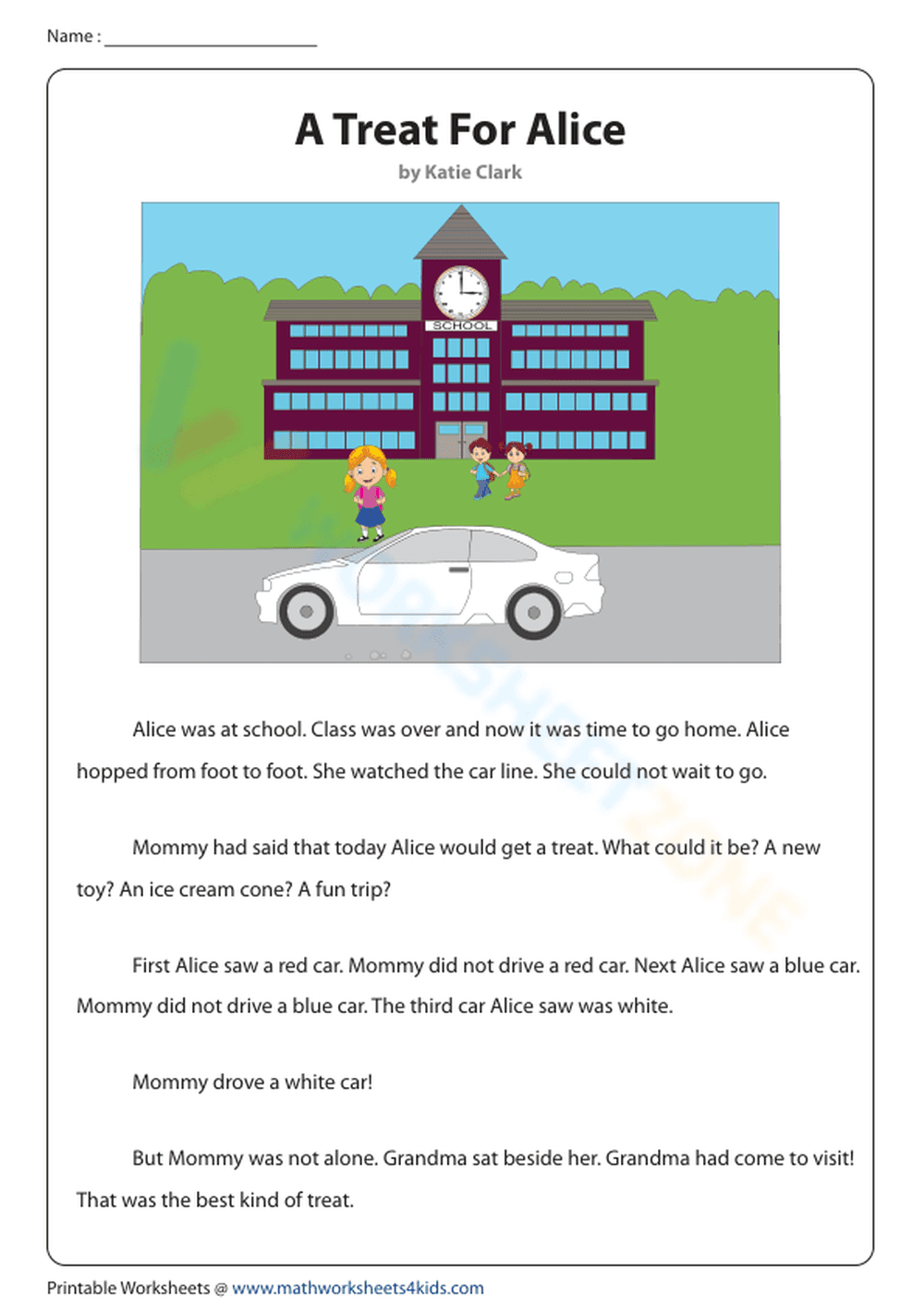

Grade 1-3 A Treat for Alice — Printable No-Prep Worksheet
Paste this activity's link or code into your existing LMS (Google Classroom, Canvas, Teams, Schoology, Moodle, etc.).
Students can open and work on the activity right away, with no student login required.
You'll still be able to track student progress and results from your teacher account.
This Grade 1-3 reading comprehension worksheet centers on "A Treat for Alice," a charming fictional narrative that builds foundational literacy skills. Students engage with the text to identify key details, recognize sequencing, and make simple inferences about the characters. By answering structured questions, learners demonstrate their understanding of story elements and character motivations in a classroom-ready format.
At a Glance
- Grade: 1-3 · Subject: Literature - Reading Comprehension
- Standard:
CCSS.ELA-LITERACY.RL.1.1— Ask and answer questions about key details in a text.- Skill Focus: Identifying Key Details & Sequencing
- Format: 2 pages · 8 problems · Answer key included · PDF
- Best For: Independent reading practice and morning work
- Time: 15–20 minutes
What's Inside
The download features the complete "A Treat for Alice" story by Katie Clark on the first page, followed by a structured assessment sheet. Students encounter 8 diverse tasks including true/false statements, multiple-choice questions, and short-response prompts that elicit specific details from the text. A full answer key is provided to facilitate quick grading, and the layout uses clear fonts and generous spacing suitable for early elementary learners.
Zero-Prep Workflow
Implementing this resource into your daily routine is efficient and requires less than two minutes of preparation. First, print the two-page PDF (approximately 30 seconds). Second, distribute the copies to your students during their literacy block or as a transition activity (1 minute). Finally, review the responses using the included answer key during a whole-group discussion or for individual progress monitoring. It is an ideal resource for substitute folders or emergency lesson plans.
Standards Alignment
This resource is primarily aligned to CCSS.ELA-LITERACY.RL.1.1, which requires students to "Ask and answer questions about key details in a text." It also touches upon RL.2.1 and RL.3.1 by encouraging evidence-based responses. Both standard codes can be copied directly into lesson plans, IEP goals, or district curriculum mapping tools to ensure instructional continuity across the early primary grades.
How to Use It
Use this worksheet as a formative assessment during or after direct instruction on story elements. Teachers can observe students as they refer back to the text to find evidence of the car colors or the identity of the special guest, which serves as a valuable indicator of their literal comprehension. Expected completion time ranges from 15 to 20 minutes depending on the student's independent reading level.
Who It's For
The material is designed for Grade 1 through Grade 3 students, providing enough simplicity for emerging readers while offering meaningful detail-oriented tasks for older children. It functions effectively for English Language Learners (ELL) due to the high-frequency vocabulary and predictable sentence structures. Pair this worksheet with a character traits anchor chart to deepen the classroom analysis of Alice's excitement.
Research by Fisher & Frey (2014) emphasizes that close reading of short fictional texts is critical for developing the cognitive stamina required for complex literacy tasks in later grades. This worksheet directly supports that development by targeting CCSS.ELA-LITERACY.RL.1.1, focusing on the skill of identifying key details through a multi-modal assessment approach. By requiring students to navigate between true/false, multiple choice, and open-ended questions, the resource ensures that comprehension is measured across different depths of knowledge. A 2024 NAEP analysis suggests that early mastery of these foundational "key detail" skills is a strong predictor of future reading proficiency and academic success. This resource provides the necessary structured practice to bridge the gap between decoding and deep text engagement, making it a valuable addition to any evidence-based literacy curriculum focused on measurable student growth and standards-aligned outcomes. Both standard codes can be copied directly into lesson plans, IEP goals, or district curriculum mapping tools.


